Scoliosis might be one of the most misunderstood spinal conditions—and often, it’s missed entirely until the effects are harder to manage.
It’s not just a “bad posture” or a “crooked back.” It’s a structural condition that, if left unchecked, can impact posture, movement, breathing, and self-esteem. But when detected early, scoliosis can often be managed well—especially during the developmental years.
What Is Scoliosis?
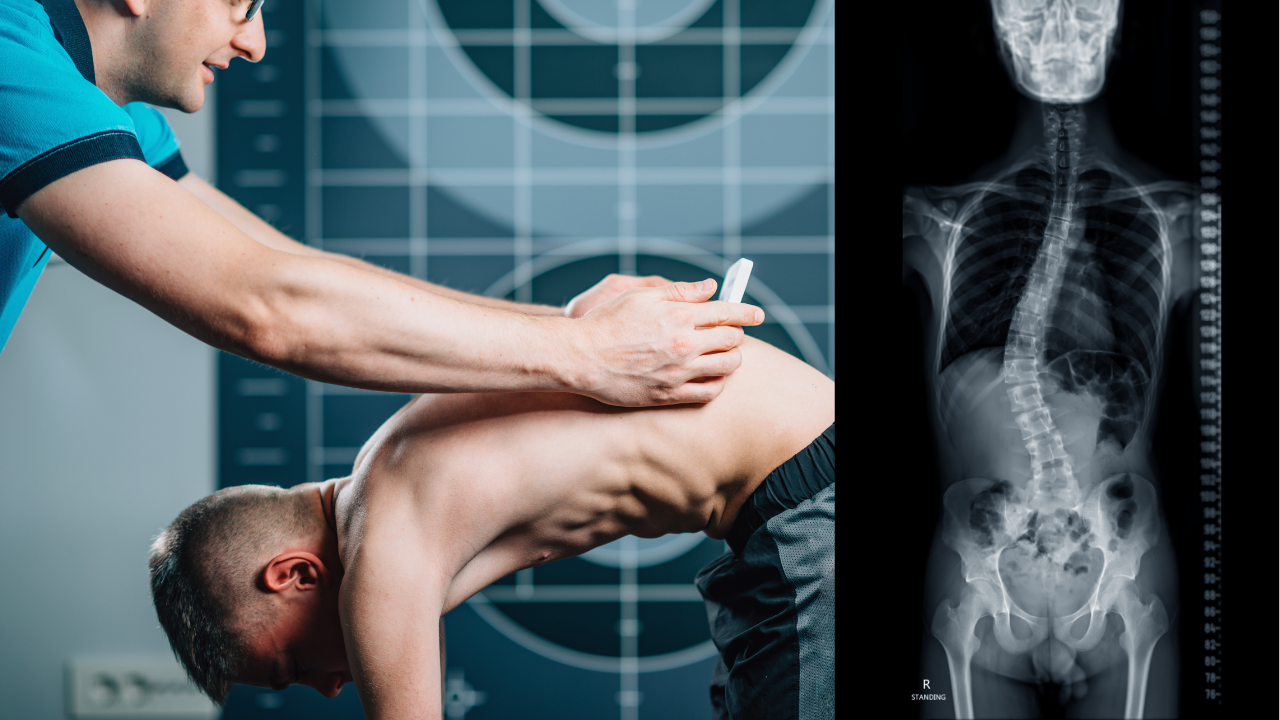
Scoliosis is defined as a lateral (sideways) curvature of the spine greater than 10 degrees, often accompanied by vertebral rotation. While the spine is supposed to curve when viewed from the side, it should appear straight when viewed from the front or back.
There are two main curve types:
• C-shaped scoliosis: A single abnormal curve
• S-shaped scoliosis: Two abnormal curves bending in opposite directions
Who Gets Scoliosis?
Scoliosis can affect anyone, but it’s most commonly seen in two groups:
1. Adolescents
Adolescent Idiopathic Scoliosis (AIS) typically emerges between the ages of 10–18. It’s more common in girls, especially between 9–14 years. Early detection here is key, as the spine is still developing.
Interesting fact: One study found 30% of ballet dancers had scoliosis—compared to just 3% of non-dancers their age.
2. Adults
Adult scoliosis can develop in two ways:
• A continuation of adolescent scoliosis (Adolescent Scoliosis in Adults)
• A new onset due to spinal degeneration (Degenerative De-Novo Scoliosis), common in older adults and postmenopausal women
What Are The Signs?
In Children:
• Uneven shoulders or hips
• One shoulder blade sticking out more than the other
• A visible curve when bending forward
• Protruding ribs on one side
In Adults:
• Loss of height or change in posture
• Leaning to one side
• Ongoing back pain
• Issues with balance or frequent falls
Why Early Detection Matters
Untreated scoliosis can worsen over time, particularly curves greater than 15–30 degrees during adolescence. As the spine grows, so can the curve—affecting appearance, breathing, and function.
In adults, degeneration of discs, joints, and ligaments can cause the spine to curve and compress, often resulting in:
• Chronic back or leg pain
• Reduced mobility
• Difficulty breathing (in severe cases)
• A hunched posture
How Is Scoliosis Diagnosed?
Early screening tools like the Adams Forward Bend Test and postural assessments help detect signs. Accurate diagnosis requires spinal X-rays and the use of a Cobb angle to measure the curve. Chiropractors are trained in these tests and assessments and can refer you for X-rays if they suspect scoliosis.
A Cobb angle over 10 degrees with vertebral rotation confirms scoliosis. Curves over 40–45 degrees may require more intensive intervention.
What Can Be Done?
There is no one-size-fits-all solution, but options include:
• Scoliosis-specific exercises
• Postural and spinal rehabilitation (like Chiropractic BioPhysics®)
• Bracing (especially for adolescents)
• Chiropractic care focused on improving spinal alignment and nervous system function
• Surgery, in rare or extreme cases
Can Chiropractic Help?
A 2017 study showed 90% of adolescents undergoing chiropractic care with structural rehabilitation techniques saw either curve correction or curve stabilization. In adults, while full correction may not always be possible, studies show improvements in:
• Pain levels
• Disability scores
• Breathing function
These outcomes suggest a focus on function, not just appearance, is essential.
Conclusion: Spinal Awareness Starts Young
The earlier scoliosis is detected and addressed, the greater the chance of maintaining spinal health through all stages of life. Whether you’re a parent checking your child’s posture, or an adult noticing changes in your own body—awareness is your best tool.
Concerned About Spinal Curves?
Spinal health is crucial, as it helps protect the nervous system, maintain postural alignment, and support movement throughout life.
Book an appointment with one of our chiropractors to see if chiropractic care could be of benefit for you. Together, we can assess, address, and support your spine—whatever stage of life you’re in.
References
Weinstein, S.L., Dolan, L.A., Cheng, J.C.Y., Danielsson, A., & Morcuende, J.A. (2008). Adolescent Idiopathic Scoliosis. The Lancet, 371(9623), 1527–1537.
– Supports the discussion of adolescent idiopathic scoliosis (AIS), including prevalence, age of onset, risk factors, and the importance of early detection during growth years.
Longworth, B., Fary, R., & Hopper, D. (2014). Prevalence and Predictors of Adolescent Idiopathic Scoliosis in Adolescent Ballet Dancers. Archives of Physical Medicine and Rehabilitation, 95(9), 1725–1730.
– Supports the statistic comparing scoliosis prevalence in adolescent ballet dancers versus non-dancers and highlights potential risk factors associated with repetitive movement patterns.
Kebaish, K.M., Neubauer, P.R., Voros, G.D., Khoshnevisan, M.A., & Skolasky, R.L. (2011). Scoliosis in Adults Aged Forty Years and Older: Prevalence and Relationship to Age, Race, and Gender. Spine, 36(9), 731–736.
– Supports information regarding adult scoliosis prevalence and the occurrence of degenerative scoliosis later in life.
Urrutia, J., Diaz-Ledezma, C., Espinosa, J., & Berven, S.H. (2011). Lumbar Scoliosis in Postmenopausal Women: Prevalence and Relationship with Bone Density, Age, and Body Mass Index. Spine, 36(9), 737–740.
– Supports the section discussing scoliosis prevalence in postmenopausal women and the relationship between spinal degeneration and curve development.
Asher, M.A., & Burton, D.C. (2006). Adolescent Idiopathic Scoliosis: Natural History and Long-Term Treatment Effects. Scoliosis, 1(2).
– Supports discussion regarding curve progression, untreated scoliosis, long-term consequences, and the importance of early intervention.
Zapata, K.A., Sucato, D.J., Lee, M.C., & Jo, C.H. (2018). Skeletally Immature Patients with Adolescent Idiopathic Scoliosis Curves 15–24 Degrees Are at High Risk for Progression. Texas Scottish Rite Hospital for Children.
– Supports statements regarding progression risk in adolescents with mild-to-moderate scoliosis curves and the rationale for monitoring during growth.
Harrison, D.E., & Oakley, P.A. (2022). An Introduction to Chiropractic BioPhysics® (CBP®) Technique: A Full Spine Rehabilitation Approach to Reducing Spine Deformities. In: Complementary Therapies. IntechOpen, London, UK.
– Supports discussion of structural rehabilitation approaches and the role of posture and spinal alignment in scoliosis management.
Morningstar, M.W., Dovorany, B., Stitzel, C.J., & Siddiqui, A. (2017). Chiropractic Rehabilitation for Adolescent Idiopathic Scoliosis: End-of-Growth and Skeletal Maturity Results. Clinical Practice, 7(1), 911.
– Supports discussion of chiropractic rehabilitation outcomes, including curve stabilisation and correction in adolescent scoliosis populations.
Blogs & Latest News
“Type 3 Diabetes”? Understanding the Link Between Blood Sugar & Brain Health
Explore the emerging research linking insulin resistance, blood sugar and Alzheimer’s disease, plus everyday habits that can support brain health as you age.
Healthy Ageing: How to Stay Active, Strong & Independent
Discover practical healthy ageing strategies to support movement, brain health, independence and wellbeing through exercise, sleep, nutrition and more.
Understanding Women’s Hormonal Health: Endometriosis, PMOS (formerly PCOS), Fibroids & Menopause
Hormonal health changes throughout life, but understanding those changes can help you make informed decisions about your wellbeing.
Learn more about endometriosis, PMOS, fibroids and menopause, plus practical lifestyle strategies that may support your health through every stage.
Flexibility for Freedom: Simple Ways to Move Better Every Day
Flexibility isn’t just about touching your toes—it’s about making everyday movement feel easier and more comfortable.
Whether it’s reaching overhead, getting out of the car, or keeping up with the kids, maintaining flexibility and mobility can help support your independence and quality of life as you age.
Read our latest blog for practical stretching tips and simple habits to help you move with confidence.
Neck Pain Relief: Common Causes, Posture & Practical Solutions
Neck pain has become one of the most common complaints in modern life—and poor posture, prolonged screen time, stress, and lack of movement can all play a role.
In this blog, we explore why neck pain develops, how posture influences spinal health, and practical steps you can take to support better movement and comfort throughout your day.
Understanding Sciatica: Looking Beyond the Pain
Sciatica is more than just pain down the leg — it’s a signal that something may be irritating or compressing the sciatic nerve.
In this blog, we explore what sciatica is, what can cause it, when symptoms may need urgent attention, and how movement, lifestyle, and appropriate care may support recovery.
The Spectrum Revealed: Understanding the Brain-Body Connection in Children**
**This article is intended for educational purposes only and is not intended to diagnose, treat, or make claims regarding any specific developmental, behavioural, or neurological condition.** More and more families are noticing behavioural, emotional, and...
Brain Health and Ageing: Simple Habits to Support a Sharper Mind
Fall Prevention for Older Adults: How to Stay Strong, Confident, and Independent
Falling may feel like a normal part of getting older, but the truth is: most falls are preventable. In fact, when it comes to injuries that hospitalise Australians, falls are the number one cause—and the risks only increase with age. Whether you're worried about...
Bulletproof Your Back: Reclaim Strength, Stability, and Control
Why Does Low Back Pain Deserve Your Full Attention? Low back pain is one of the most common reasons people miss work, skip out on family activities, and quietly stop doing the things they love. But here’s the real problem: it’s often underestimated—until it becomes...
Cosmic Heart: Exploring the Heart-Brain Connection and Emotional Rhythm
We’ve all been taught that the heart is just a pump, a mechanical organ pushing blood through the body like a motor. But what if that’s only a small part of the story? The latest science, and the most ancient wisdom, tells us that the heart is so much more. It’s a...
The Building Blocks of Infant Development: Tummy Time, Milestones & Sensory Integration
Infant development is a delicate, beautiful sequence of brain and body milestones. While every child grows at their own pace, there are foundational experiences that help babies thrive. This workshop series explores three core pillars: tummy time, milestone...
Recent Comments